
Macro
Sony FE 100mm f/2.8 STF GM OSS
The STF (Smooth Trans Focus) element in this G Master lens produces uniquely smooth bokeh that's unlike anything else in the Sony lineup. It doubles as an excellent macro lens with beautiful rendering.
First Impressions
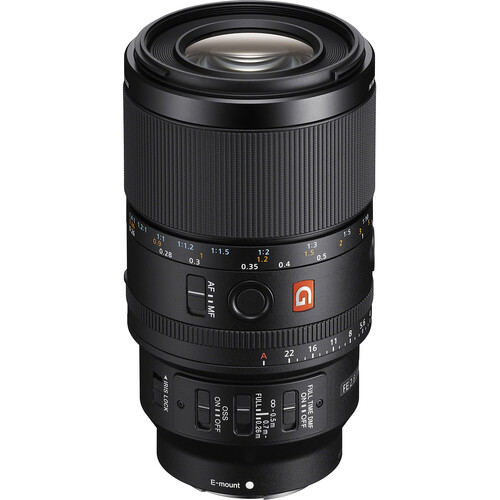
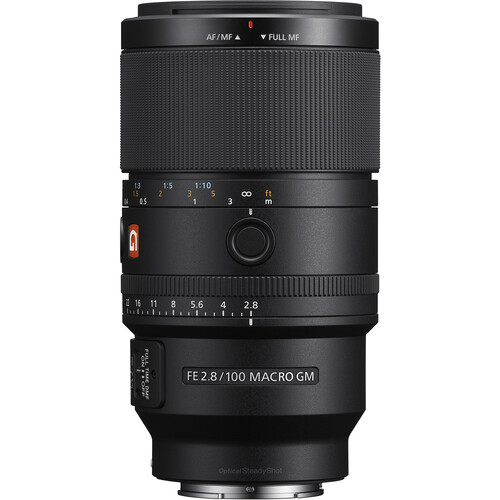
I will be upfront: the 100mm STF GM is not really a macro lens in the traditional sense. It only reaches 0.25x magnification natively, which puts it well below the 1:1 threshold most macro shooters expect. But what drew me to it was the promise of that Smooth Trans Focus element, a special apodization filter built into the optics that creates a bokeh quality unlike anything else I have used on Sony E-mount. Picking it up, the build is unmistakably G Master — tight tolerances, a beautifully damped focus ring, and a reassuring weight that communicates precision. There is also a dedicated aperture ring on the barrel, which I have come to appreciate for the tactile control it offers, especially when I want to make quick depth-of-field adjustments while framing a close-up shot of a flower cluster.
In the Field
Where this lens truly shines is in its rendering of out-of-focus areas, and for flora close-up work that quality is transformative. When I photograph wildflowers or blooming arrangements, the STF element melts the background into a creamy, almost ethereal wash that has a completely different character from standard lenses — there are no harsh edges or distracting bright rings in the bokeh, just a pure, gradient-like softness that makes subjects feel like they are floating. For insect work it is more limited; the 0.25x magnification means you are really only getting frame-filling shots of larger subjects like butterflies or dragonflies, and smaller arthropods will need significant cropping. The autofocus can also be slower than what I am used to with dedicated macro lenses, partly because the STF element reduces the effective light transmission to about T/5.6 despite the f/2.8 aperture, which gives the AF system less light to work with. That said, when I nail the focus on a butterfly perched on a wildflower with a meadow dissolving into pure color behind it, the results are unlike anything else in my lens collection.
Verdict
The Sony 100mm STF GM is a specialist tool, and I think it is important to be honest about what it is and is not. It is not a replacement for a true macro lens if your primary goal is high-magnification arthropod photography — for that, I still reach for the 90mm Macro G or the Laowa 90mm every time. But as a companion lens for flora work, environmental close-ups, and any situation where the quality of the background blur matters as much as the sharpness of the subject, it is genuinely unmatched. I find myself grabbing it on spring wildflower walks and garden visits where I want images that feel more painterly than clinical, and it never disappoints in that role. If you can accept its limitations and appreciate what the STF element brings to the table, this is one of those lenses that produces images with an immediately recognizable look that no amount of post-processing can replicate.